
Artistry in Detail: The Fittings and Scabbards of Traditional Chinese Swords
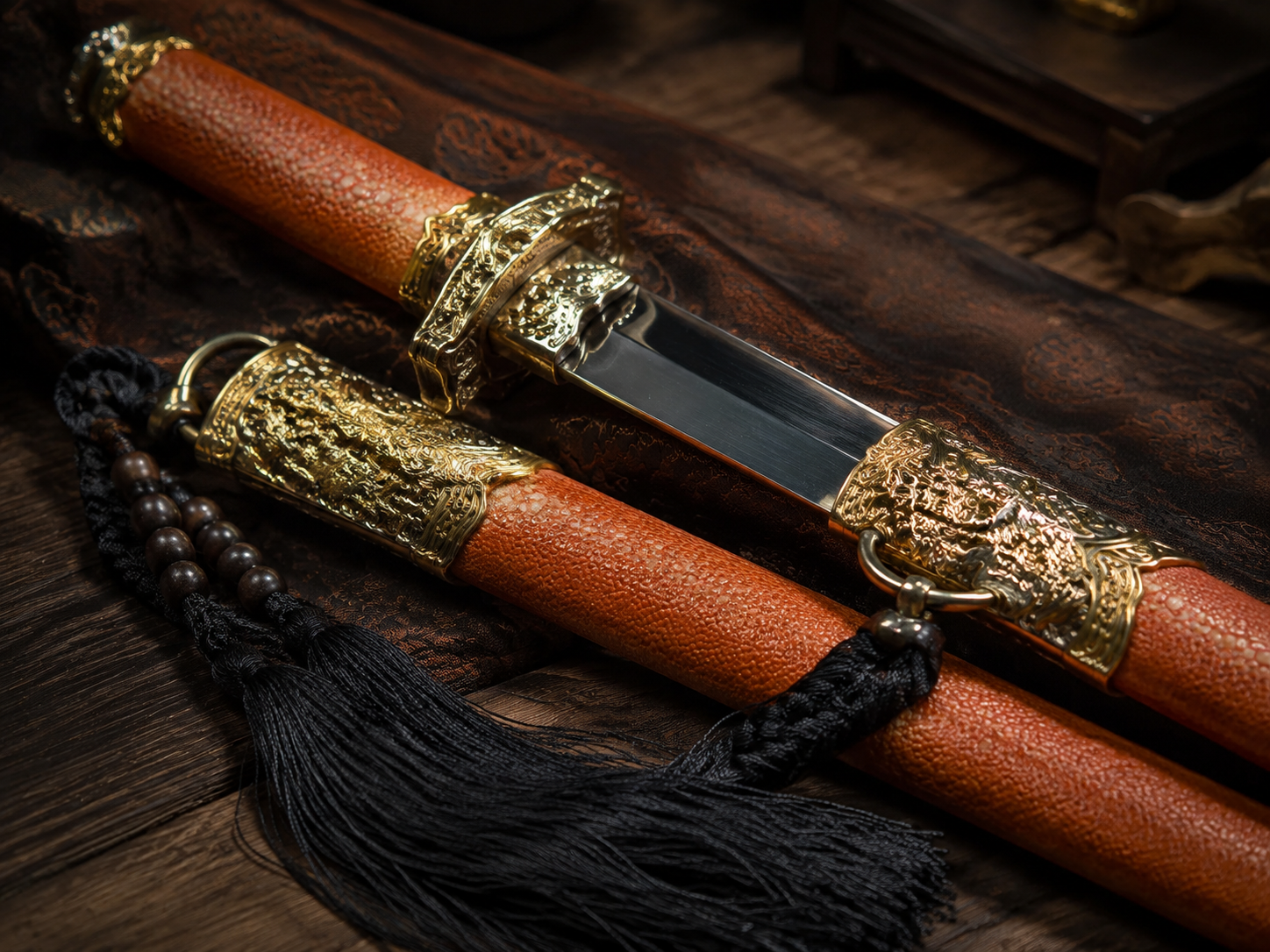
A complete traditional Chinese sword is never just a raw piece of forged steel. From the pommel to the scabbard, the intricate fittings wrap the weapon in centuries of decorative artistry.
Traditional Metalwork and Engraving Fittings were commonly crafted from bronze, silver, or iron, utilizing elaborate metalworking techniques:
- Inlay and Gilded Gold/Silver: Inlaying gold and silver wires or applying gold plating created regal, elaborate motifs.
- Relief and Openwork: Fittings often featured carved dragons, phoenixes, taotie masks, or auspicious clouds, serving both aesthetic and non-slip grip purposes.
Scabbard and Handle Materials The scabbard does more than protect the blade edge—it is a central canvas for craftsmanship.
- Precious Hardwoods: Ebony, rosewood, and sandalwood were favored for their structural stability and elegant grain.
- Ray Skin (Shagreen): High-end scabbards were wrapped in ray skin (or shark skin), polished to a pearlescent sheen that provided moisture resistance, durability, and a firm grip.
The Metallurgy Meets Artistry Classic sword assembly involves multiple distinct fitting components (guard, pommel, collar, scabbard chape, etc.). Together, they transform cold, hard steel into an exquisite piece of collectible art.